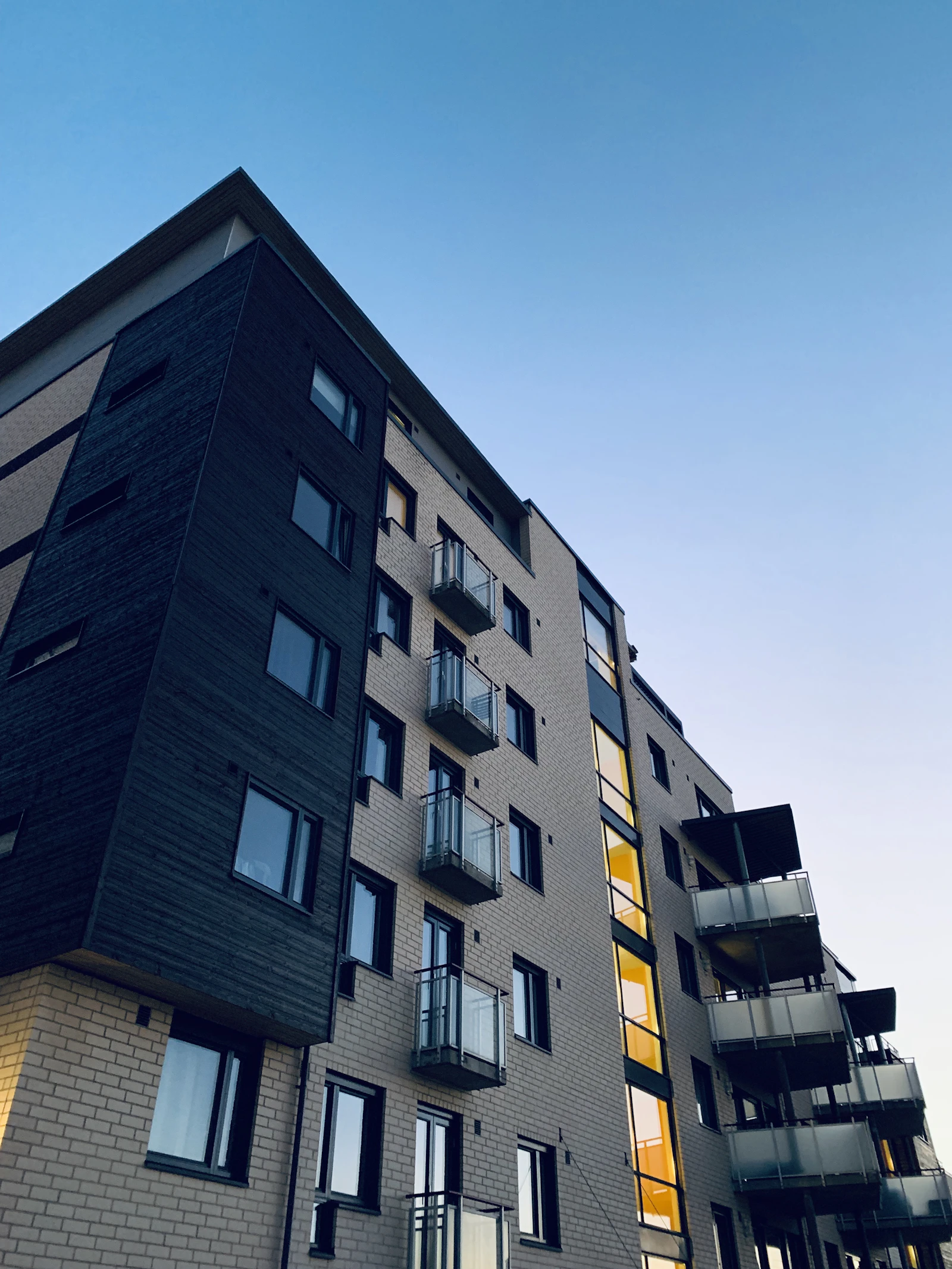

Guards fail slowly and then suddenly. The slow part runs for years and produces signals that are visible from three metres away to anyone who knows what to look at. The sudden part is a post that rotates out of a slab edge under someone's weight. Almost every failure investigation finds that the warning signs were present and photographed, often in a property manager's own inspection file, and were categorized as cosmetic. This is how to tell the difference.
Movement where there should be none
A guard should feel like part of the building. Any perceptible movement under moderate hand pressure is significant — not because the guard is about to fail today, but because it means load is going somewhere it was not designed to go, and that path deteriorates progressively. Look for a post that rocks at its base, a base plate that has lifted at one edge, rotation of a post relative to the slab, a gap opening between the base cover and the deck, creaking or clicking under load, and a guard section that moves noticeably more than its neighbours.
Movement at a single post is a repair. Movement at several posts along one elevation, or clustered near a corner or an expansion joint, is a pattern and needs engineering attention. Treat anything that moves as a same-day item until someone qualified has looked at it.
Corrosion signatures and what each one is telling you
- A white powdery bloom on aluminum, sometimes with small pits underneath. This is chloride-driven pitting corrosion, characteristic of coastal exposure or de-icing salt. Cosmetic at first, structurally relevant if it progresses into a load-bearing section.
- Rust streaks running down the concrete below a base plate. Aluminum does not rust — so the stain is coming from a steel fastener, a steel embed, or reinforcing inside the slab. This is the most serious of the common signs, because the deterioration is happening inside the structure where it cannot be inspected.
- A dark halo or corroded ring around a fastener where two different metals meet. Galvanic corrosion between dissimilar metals, accelerated by moisture, and it attacks the less noble metal preferentially.
- Cracking or spalling in the concrete radiating outward from an anchor. Corroding steel expands as it oxidizes and splits the concrete from within. Once visible, this condition only accelerates.
- Filiform corrosion — fine worm-like tracks under a coating, usually starting at a cut edge, a drilled hole or a scratch. It means the coating has been breached and moisture is working underneath it.
Glass-specific warning signs
Glass gives clearer warnings than most people credit it for, provided someone looks at the edges rather than the middle. Edge chips and small conchoidal shells matter far more than surface scratches, because a tempered panel carries its strength in a surface compression layer and an edge defect is where a failure will initiate. Cloudiness, haze or small bubbles migrating in from the edge of a laminated panel indicate interlayer delamination, almost always from water sitting in the glazing pocket — a drainage problem masquerading as a glass problem.
- A panel that has visibly shifted, dropped or rotated in its shoe.
- Gasket squeezed out of its channel, missing, hardened or reverted to a chalky state.
- Any crack in a glass panel. A monolithic tempered panel does not hold a partial crack — when it fails it fragments completely — so a cracked panel still standing in the shoe is usually a laminated unit with one ply broken, and it should be treated as compromised and replaced.
- A panel that deflects noticeably more than its neighbours under the same hand pressure, which suggests a hardware or setting block problem rather than a glass problem.
- Rattling or a hollow sound in wind, indicating the panel is no longer firmly captured.
- Staining or mineral deposits running down from a top cap, which usually means water is entering the assembly and not draining.
Look at the edges of the glass and the base of the post. Almost nothing important about a railing's condition is visible in the middle of the panel.
When the problem is not the railing at all
A significant share of what gets reported as a railing defect is a balcony defect showing up at the railing. Spalling or delamination at the slab edge, traffic coating that has cracked or lifted at the perimeter, sealant that has lost adhesion at the base, ponding water along the guard line, and efflorescence on the underside of the slab all point at the same underlying story: water is getting into the concrete at the guard interface. The guard is the messenger.
This matters practically because it changes who should be looking at it. A railing contractor can re-torque a base plate. Only an engineer assessing the slab edge can tell you whether the concrete around the anchor still has capacity. If you see rust staining below a base plate together with cracking at the slab edge, that is a structural investigation, not a railing service call.
Geometry drift and the quiet compliance problems
Some warning signs are not deterioration at all — they are changes that occurred after construction and quietly moved the guard out of compliance. The most common by a wide margin is the addition of deck tiles, pavers or a raised wood platform on a balcony. Raise the walking surface by 50 mm and you have reduced the effective guard height by the same amount, and you have moved the non-climbable zone up with it. That zone runs roughly from 140 mm to 900 mm above the walking surface and must contain nothing that offers a foothold — which is precisely where owner-installed planters, storage boxes, seating and bicycle racks tend to end up.
- Deck tiles, pavers or platforms added over the original balcony surface.
- Planters, storage benches or furniture positioned against the guard, creating a climbable element for a small child.
- Privacy screens, wind panels, netting or shade cloth attached to guards. These change the wind load on a system that was engineered as an open guard, and the loads involved are not trivial.
- Flower boxes, satellite dishes or hooks hung off the guard, applying loads at the top rail that were never in the design.
- Gaps that appear to have grown at expansion joints, corners or where a guard meets the building.
- Any guard section replaced piecemeal over the years by an unknown contractor, which frequently produces mismatched heights and non-conforming openings at the transition.
Required guard heights vary by occupancy and location — 900 mm applies in some situations such as within dwelling units — so measure and record rather than asserting. Two of these checks take a tape and a 100 mm ball on a stick, and a property manager can run them on a whole elevation in an afternoon.
Triage: what needs action today and what needs a budget line
Same-day action: any guard that moves under hand pressure, any cracked glass panel, any missing guard section, any opening that a 100 mm sphere passes through in an area accessible to children, and any base plate showing rotation or lift. The response is immediate isolation of the affected balcony, temporary guarding if the area cannot be closed off, written notice to the occupant, and a call to an engineer. Document the condition and the response the same day, because if anything happens later the record of what you did in the first 24 hours is what matters.
Within the year: rust staining at base plates, corrosion at fasteners, laminated edge delamination, failed sealant at the guard base, and any pattern of similar defects across an elevation. Into the capital plan: general finish degradation, chalking and fade, aged gaskets, and end-of-life indicators that are widespread but not urgent. Monitor with a defined re-inspection date and a defined trigger: isolated cosmetic damage, minor surface staining, and single-location issues with no pattern behind them.
Frequently Asked
Saw something you are not sure about
Send us a photograph. Katena's engineering and installation teams assess existing guard systems across Canada and the northeastern US, and we will tell you plainly whether it is a maintenance item or a project. Call (514) 821-0842 or email [email protected].
Get a Quote