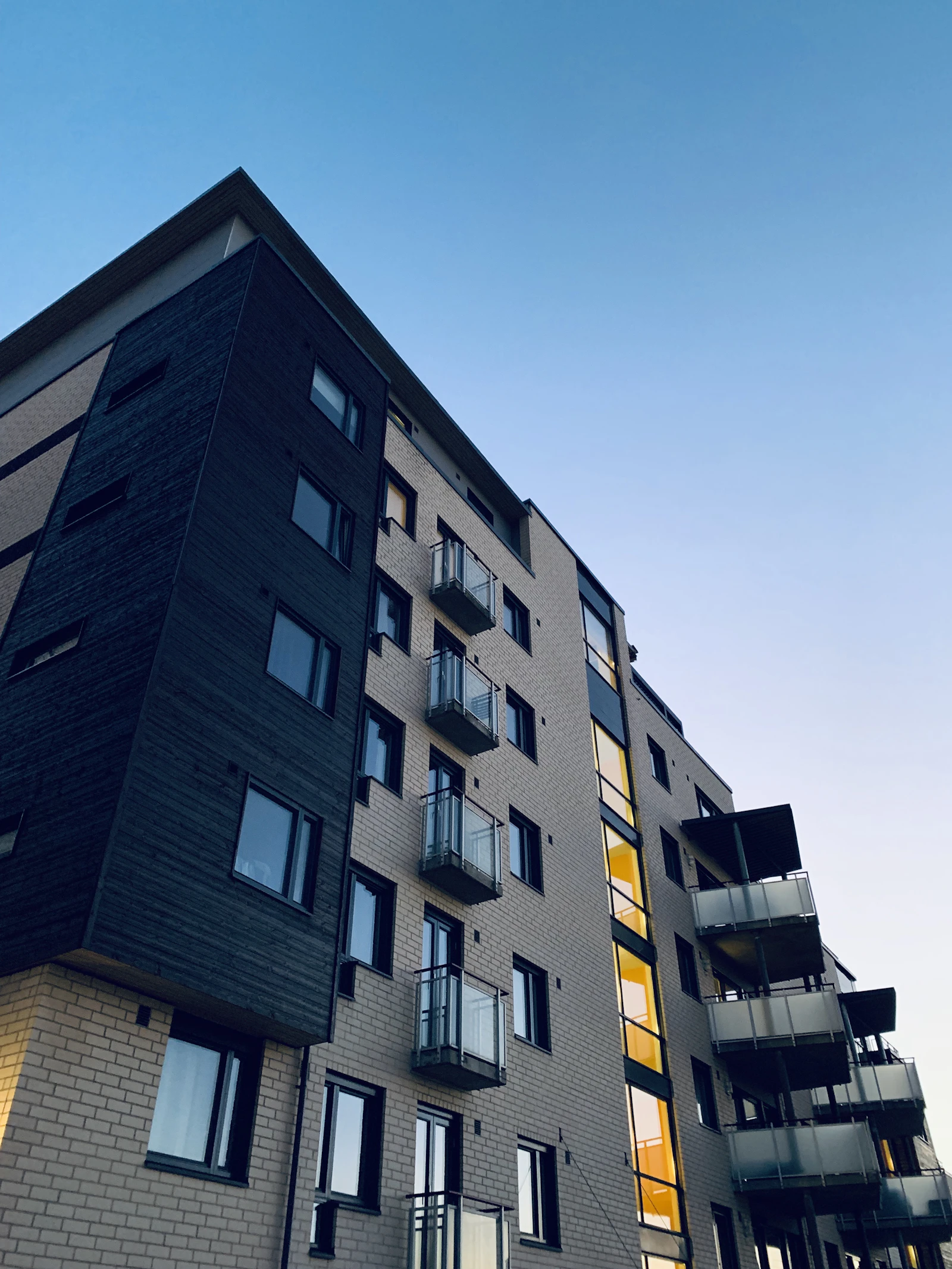

Removal gets treated as the trivial half of a railing replacement project — the part that happens before the real work starts. It is not. The moment a guard comes off a balcony you have created an unprotected edge on an occupied building, and everything that follows is governed by how well that risk was planned for. Add a hazardous materials question on any structure built before the early 1990s, four distinct waste streams, and a set of holes through the waterproofing membrane, and removal earns its own section in the specification.
Temporary guarding is the first line item, not an afterthought
Guards are generally required wherever there is a drop exceeding 600 mm, and that requirement does not pause for construction. Worker fall protection is covered by provincial occupational health and safety regulation and is the contractor's responsibility. The harder problem is residents, who live behind sliding doors that open directly onto the edge you just removed. Every serious removal plan addresses both.
- A temporary guard or hard barrier installed at any balcony where the permanent guard has been removed, rated and secured — not caution tape and not a plastic mesh fence zip-tied to nothing.
- Balcony access lock-out at the suite door, with a physical device and clear signage, coordinated with the occupant in advance.
- Written notice to affected residents with dates, duration and a contact, delivered well ahead of the work and repeated as the schedule moves.
- Signage in the languages required for your jurisdiction and building population.
- A daily close-out rule: no open edge is left unguarded at the end of a shift on an occupied floor, full stop. If reinstatement cannot be completed, the removal does not start that day.
- Debris containment and drop protection below, plus a controlled ground-level exclusion zone.
This is also where phasing gets decided. On a well-run project a given balcony is typically out of service for a matter of days rather than weeks, because removal, anchor preparation, waterproofing tie-in and new guard installation are sequenced to follow each other closely rather than being run as separate building-wide passes.
Screen for hazardous materials before anything gets cut
On buildings from before the early 1990s, sealants, caulking and some glazing compounds may contain asbestos, and painted steel components may contain lead. Both are common enough in that vintage that assuming otherwise is not a defensible position. In most provinces a designated substance survey or hazardous materials assessment by a qualified consultant is required before disturbing suspect materials, and cutting or grinding is exactly the kind of disturbance the regulations contemplate.
The economics here are lopsided in the owner's favour. Sampling and laboratory analysis of a handful of materials is a small cost on any capital project. Discovering the issue mid-demolition means a stop-work, an abatement contractor, a schedule that has slipped a month, and a conversation with the regulator. Screen early, and if the results come back clean you have a document that closes the question for the whole project.
Aluminum is the easy part of a railing teardown. Glass is the awkward part, and the sealant is the part that decides whether you needed an abatement contractor.
Separating the waste stream
A railing removal produces four or five materials with completely different destinations, and the difference between separating them on the balcony and dumping them into one bin shows up on the disposal invoice and in whatever diversion reporting the project has to produce.
- Aluminum extrusion — the good news of the project. Aluminum is recyclable indefinitely without loss of properties, and remelting it takes a small fraction of the energy of primary production. Clean, separated extrusion carries genuine scrap value: enough to offset a share of hauling costs, not enough to change the project economics.
- Stainless steel fasteners and hardware — separate them, they are worth more than mixed metal and they contaminate an aluminum load.
- Glass — the difficult stream, addressed below.
- Sealants, gaskets, setting blocks and glazing tapes — generally landfill, and potentially a designated substance if the building is old enough.
- Concrete from anchor removal and slab edge repair — a normal construction and demolition stream with well-established recycling routes in most Canadian markets.
What actually happens to the glass
Architectural flat glass does not follow the same path as the container glass in a residential blue bin. Tempered glass can enter some cullet streams where a processor accepts it. Laminated glass — which is what most guard glazing is, since laminated safety glass is normally required where glass acts as the structural guard element — contains a polymer interlayer bonded between the plies, and separating the interlayer from the glass requires specialized processing that relatively few facilities operate. In practice a substantial share of removed guard glass is either landfilled or downcycled into aggregate or abrasive.
That is the honest position, and it is worth knowing before a board commits to a diversion target in a sustainability report. Recovery options do exist in some markets and are improving. Ask your hauler specifically what they do with laminated architectural glass, get the answer in writing, and set the target based on the answer rather than on an assumption.
The anchor problem
Every removed post leaves an anchorage condition that has to be dealt with, and this is where removal quietly becomes envelope work. There are three approaches and they are not equivalent.
- Cut flush and patch. Fastest, but it leaves embedded metal in the concrete. If that metal is steel and the slab edge is wet, you have left a future corrosion problem inside the structure.
- Core out and repair. Removes the embedded component entirely and allows a proper structural patch. More expensive, slower, and generally the right answer where the existing anchors show any corrosion.
- Reuse the existing anchorage. Attractive on paper, rarely workable in practice, because bolt patterns differ between systems and the existing anchors were sized for the original guard's loads — which a taller replacement guard will exceed.
Whichever route is chosen, every anchor location is a penetration through the balcony waterproofing, and the reinstatement of that membrane is not a railing trade activity. This is the coordination point that goes wrong most often on retrofit projects: the guard contractor patches the concrete, the waterproofing contractor arrives three weeks later, and neither believes the interface detail was their scope. Name it explicitly in the specification, assign it to one party, and require a mock-up of the detail before production work starts.
Document the diversion while the bins are still on site
Waste haul tickets with weights and destinations are trivially easy to collect during the project and nearly impossible to reconstruct afterward. They support green building certification credits where the project is pursuing them, they feed ESG and sustainability reporting for institutional owners, and some municipalities have construction and demolition diversion requirements that carry real consequences — check what applies locally rather than assuming. Require the tickets as a condition of progress payment and the paperwork arrives without anyone chasing it.
Frequently Asked
Planning a guard replacement on an occupied building
Katena performs removal and installation with our own crews, which keeps temporary guarding, sequencing and resident coordination under one accountable party. Contact us at (514) 821-0842 or [email protected].
Get a Quote