Buildings rarely replace railings on a schedule. They replace them after a scare — a guard that moved under someone's hand, a panel that failed, an inspector's notice — and the project that follows is priced under time pressure, tendered to whoever is available, and paid for out of a special assessment. Capital planning is the discipline that converts that sequence into a funded, sequenced, competitively tendered project. It is not complicated work, but it depends on getting one thing right at the start: recognizing that a railing is not a single asset with a single renewal date.
Six assets sharing one location
Ask a planner when the railings need replacing and you get one year. Ask what will need money in the interim and you usually get silence, because the model has no place to put it. Split the assembly into its actual components and the plan becomes both more accurate and more useful, because it exposes the mid-life interventions that extend the whole system's life at a fraction of replacement cost.
Planning lives that hold up
The figures below are planning assumptions, not guarantees, and each varies substantially with exposure, original quality and maintenance history. Use them to structure a budget, then let a condition assessment adjust them.
- Aluminum structure — posts, base shoes, top caps: 30 to 40 years or more where the finish has been maintained and anchorage stays dry. Aluminum does not rust, and the metal itself is rarely the reason a guard is replaced.
- Applied finish: roughly 15 to 25 years inland before refinishing becomes a visual necessity, shortening to something closer to 10 to 15 years in high-UV or salt-laden coastal exposures. Higher-performance architectural coating systems sit at the long end of that range.
- Structural sealant and wet-glazed joints: 10 to 20 years. This is the component that quietly determines whether the anchorage survives, because failed sealant is how water reaches the base.
- Gaskets, setting blocks and dry glazing components: 15 to 25 years. Cheap to replace on their own, expensive to replace once their failure has damaged something else.
- Fasteners and anchors: nominally matched to the structure, but stainless fasteners in chloride environments deserve inspection at 10 to 15 years, and any steel component in contact with concrete deserves inspection sooner.
- Glass: no meaningful wear-out life absent damage. Do not budget a replacement year for glass — budget a running annual allowance for breakage, chips and delamination, and let the assessment tell you when the rate is climbing.
Exposure is the multiplier
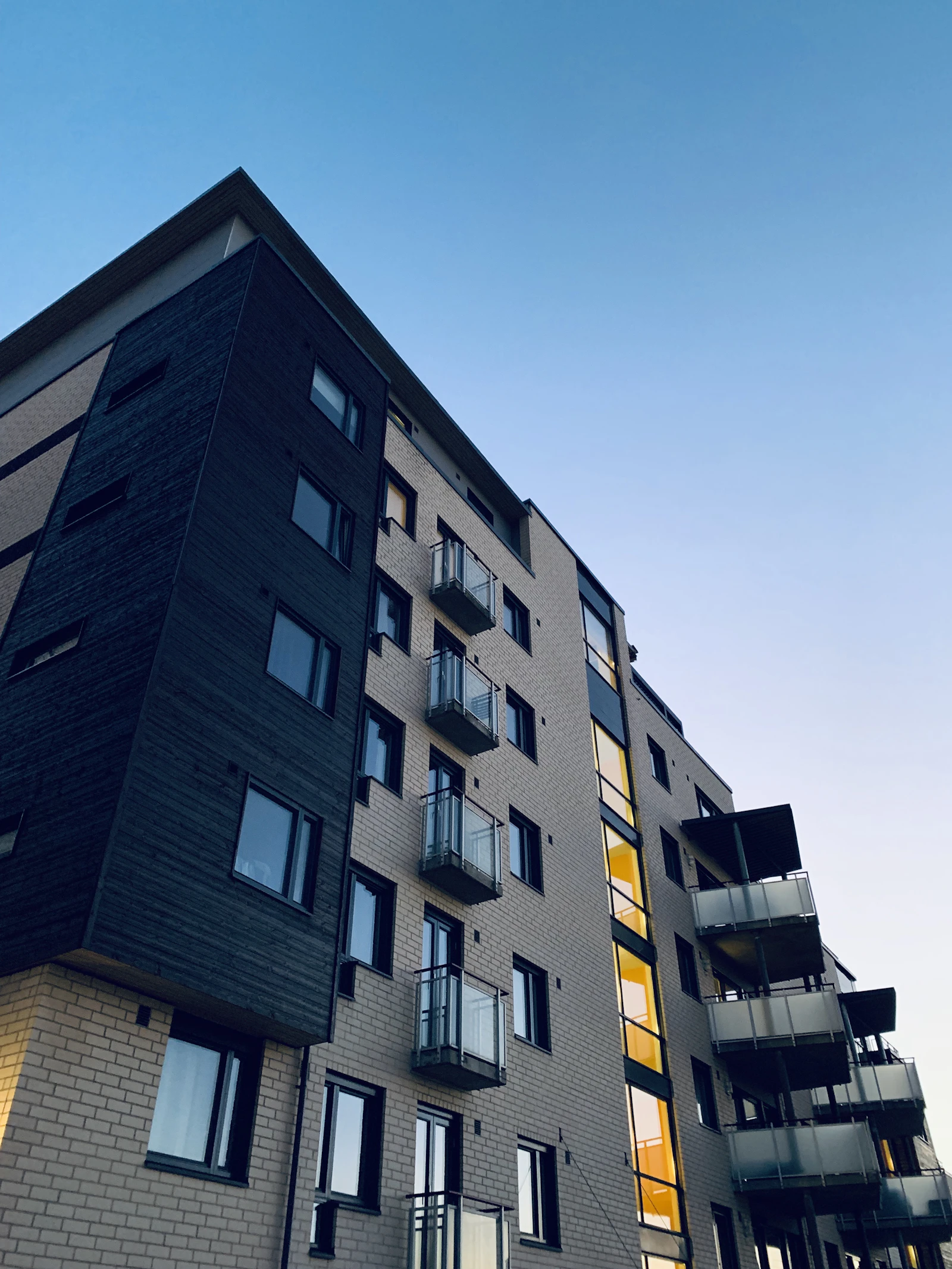
Two buildings of identical age and identical specification can be a decade apart in condition. Coastal buildings in Halifax or St. John's take airborne chloride continuously, and chloride is what turns a benign surface into pitting corrosion. Height matters, because wind-driven rain and UV exposure both increase with elevation, and the top three floors of a tower routinely show a decade more apparent age than the podium. Orientation matters, because south and west elevations take the UV load. Ground-level and podium guards take de-icing salt directly. Pool decks add chlorine to the equation.
The practical consequence is that a single building-wide replacement year is usually wrong. Build the plan by elevation, or at least by exposure group, and you will spend money where the deterioration actually is.
Two identical buildings, twenty years apart in condition, and the only difference is which way the weather came from.
Escalation, volatility and the real cost of waiting
Most reserve studies apply a general construction escalation assumption in the 2 to 4 per cent range. Railings do not always cooperate. Aluminum is a globally traded commodity, and Canadian railing pricing has been pushed around by aluminum tariffs and trade measures in ways that no smooth escalation curve captures. Glass pricing responds to freight and energy costs. The right hedge is not a cleverer escalation rate; it is a contingency band on the railing line and a willingness to move a project forward when pricing is favourable and the reserve can carry it.
The larger cost of deferral is not escalation at all — it is the migration of a cheap problem into an expensive one. A failed sealant joint at a base shoe costs a modest amount per linear foot to renew. Left alone, it admits water to the anchor cavity. Water plus embedded steel produces corrosion, corrosion produces expansion, and expansion cracks the slab edge. The concrete repair that follows commonly costs several times what the sealant renewal would have, and it takes the balcony out of service for far longer. That progression is the single strongest financial argument for funding mid-life maintenance.
Phasing: sequence by access, not by calendar
The instinct on a constrained reserve is to spread the work thinly — one elevation per year for four years. That is often the most expensive way to do it, because a large share of a retrofit railing project is fixed cost that repeats with each mobilization: swing stage rigging or lift rental, hoarding and site protection, resident notification programs, engineering review, permitting and supervision. Paying those four times to save cash flow can add materially to total project cost.
The better rule is to phase in units of access setup. If one rigging configuration reaches two elevations, do both in one season. If the building has distinct towers or podium and tower zones with genuinely separate access, those are natural phase boundaries. Then let the condition data decide the order: worst exposure first, unless a slab repair schedule dictates otherwise. Where guards must come down while units remain occupied, sequencing also has to account for temporary guarding and the length of time each balcony is out of service — usually a matter of days per balcony when the work is planned properly.
Bundle with envelope work — this is where the money is
Railing anchorage, balcony waterproofing, traffic coating and slab edge concrete all live within the same few hundred millimetres of building. Any one of them cannot be renewed without disturbing the others. If the capital plan schedules balcony waterproofing in 2029 and railing replacement in 2034, the building will pay to remove and reinstall guards in 2029, then pay to remove them again five years later — and the reinstalled guards will have new penetrations through a five-year-old membrane.
- Balcony traffic coating and waterproofing renewal — the guard base sits in it.
- Slab edge concrete repair — the anchors are in it.
- Window and door replacement — same access setup, same resident disruption, often the same swing stage.
- Sealant renewal on the elevation — the crews and equipment overlap almost entirely.
- Any facade recladding or overcladding project, which changes the guard interface entirely and should never be planned without the railing scope in the same package.
Aligning these items is the highest-leverage move in railing capital planning. It can be worth more than any procurement saving, and it costs nothing but coordination at the planning table. The corollary is that a railing replacement should never be scheduled in isolation without checking what else is due within a five-year window on either side.
Extending life deliberately
Service life is not fixed at installation; it responds to what the building does. Regular washing removes chloride and pollutant deposits before they initiate pitting, and in coastal exposures it is the single highest-value maintenance activity available. Documented torque checks on a rotating sample catch loosening before it becomes movement. Prompt sealant repair keeps water out of the anchor. A written maintenance schedule with assigned responsibility turns those from good intentions into events with dates. None of it is expensive. All of it shows up as years on the back end of the capital plan.
Frequently Asked
Build the plan before the scare
Katena's in-house engineering and installation teams work with owners and property managers on multi-year guard replacement programs. Call (514) 821-0842 or email [email protected] to start with an assessment and a budgetary plan.
Get a Quote